

Epilepsy Models
Epilepsy is a chronic neurological disorder characterized by abnormal neuronal activity and recurrent seizures, affecting approximately 70 million people worldwide. Established rodent epilepsy models are widely used for investigating disease mechanisms and biomarkers and for antiepileptic drug screening.
Greentech provides a range of established epilepsy animal models for different research objectives.
Our Epilepsy Models
1. Maximal Electroshock Seizure (MES) Model
Model Overview: The maximal electroshock seizure (MES) model mimics generalized tonic-clonic seizures in humans. It is simple, cost-effective, and widely used as a standard model for the initial screening of antiepileptic drugs.
Model Induction: Electrodes are placed at the bilateral auricular or ocular sites to deliver a brief, high-intensity electrical stimulus, inducing tonic hindlimb extension.
Evaluation Parameters: Assessment of tonic hindlimb extension, number of animals protected from tonic seizures, mortality, maximal electroshock seizure protection rate, and mortality rate.
2. Acute Pentylenetetrazole (PTZ) Model
Model Overview: Pentylenetetrazole (PTZ), a GABA receptor antagonist, induces acute seizures following high-dose intraperitoneal administration and mimics generalized tonic-clonic seizures. The model is widely used for the initial screening of antiepileptic drugs.
Model Induction: A single intraperitoneal injection of PTZ is used to induce seizures, with a target Stage V seizure rate of 95–100%.
Evaluation Parameters: Racine seizure score and latency to Stage V seizures.
3. Chronic Pentylenetetrazole (PTZ) Kindling Model
Model Overview: Repeated administration of subconvulsive doses of PTZ progressively increases seizure severity and seizure susceptibility, eventually leading to seizures following previously subthreshold stimulation.
Model Induction: Intraperitoneal administration of PTZ every other day for 15 consecutive doses.
Evaluation Parameters: Latency to Stage V seizures and Stage V seizure incidence.
4. Intrahippocampal Kainic Acid (KA) Model
Model Overview: Kainic acid (KA) is a neurotoxin commonly used to induce seizures. The KA model recapitulates key clinical and pathological features of human epilepsy, including neuronal loss, gliosis, and mossy fiber sprouting. It is suitable for investigating epileptogenesis and antiepileptic drug resistance, evaluating pathological changes, and validating therapeutic targets for temporal lobe epilepsy.
Model Induction: Under anesthesia, KA is administered by stereotactic injection into the hippocampus. Animals typically exhibit Stage IV–V seizures immediately after recovery from anesthesia, indicating successful model induction.
Evaluation Parameters: Cognition-related behavioral assessments and histopathology.
5.Lithium Chloride–Pilocarpine Model
Model Overview: The lithium chloride–pilocarpine model induces sustained neuronal hyperexcitability and seizures and recapitulates key features of human temporal lobe epilepsy. It is suitable for investigating seizure mechanisms, evaluating neuroinflammation, and screening antiepileptic drugs.
Model Induction: Pilocarpine is administered 18–20 hours after intraperitoneal administration of lithium chloride. Animals exhibiting Stage IV or higher continuous seizure activity are considered successfully modeled. Pilocarpine administration may be repeated in animals that do not develop seizures.
Evaluation Parameters: Racine seizure score and latency to Stage V seizures.
Animal Species
Rats, mice
Representative Study
1. Acute Pentylenetetrazole (PTZ) Model
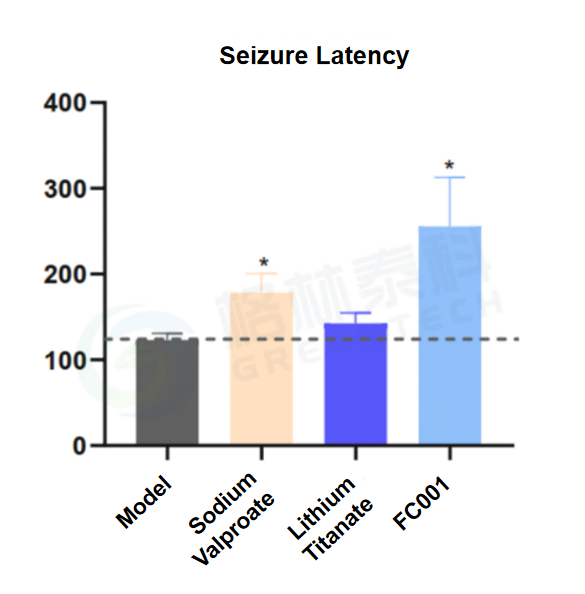
Figure 1. Latency to seizure onset in the acute PTZ model (unit: s).
2. Intrahippocampal Kainic Acid (KA) Model
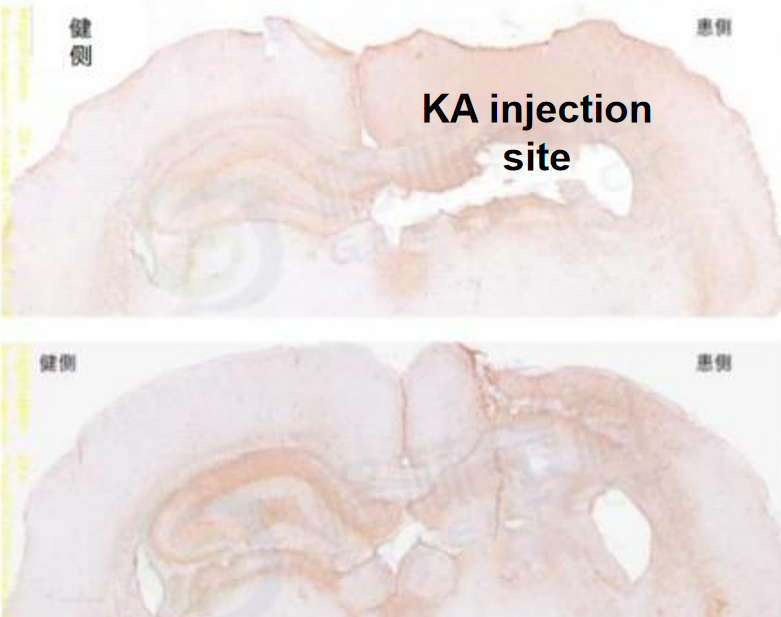
Figure 2. Pathological changes in theIntrahippocampal Kainic Acid (KA) Model.
Inquiries
Request a quote now, or email us at BD@greentech-bio.com to inquire about our services or obtain a quote for your project.
-
- CRO Services
- Cardiovascular Diseases
- Psychiatry & Neurology
- Oncology
- Metabolic Diseases
- Inflammation & Autoimmune Diseases
- Pain & Analgesia
- Bone, Joint & Cartilage Diseases
- DMPK & Non-GLP Toxicology
- In Vitro Drug Screening
- Efficacy Testing for Medical Devices
-
- Platforms
- Endovascular Surgery
- Behavioral Tests
- Histopathology
- Clinical Testing
- Bioanalysis
-
- Resources
- Brochure
- FAQ
-
- About Us
- Company Profile
- Company Culture
- Honors
- Cooperators
- Enterprise Memorabilia
-
- News & Blog
- Company News
- Blog
-
- Contact Us